


What should be in a driver’s first aid kit and how to use it?
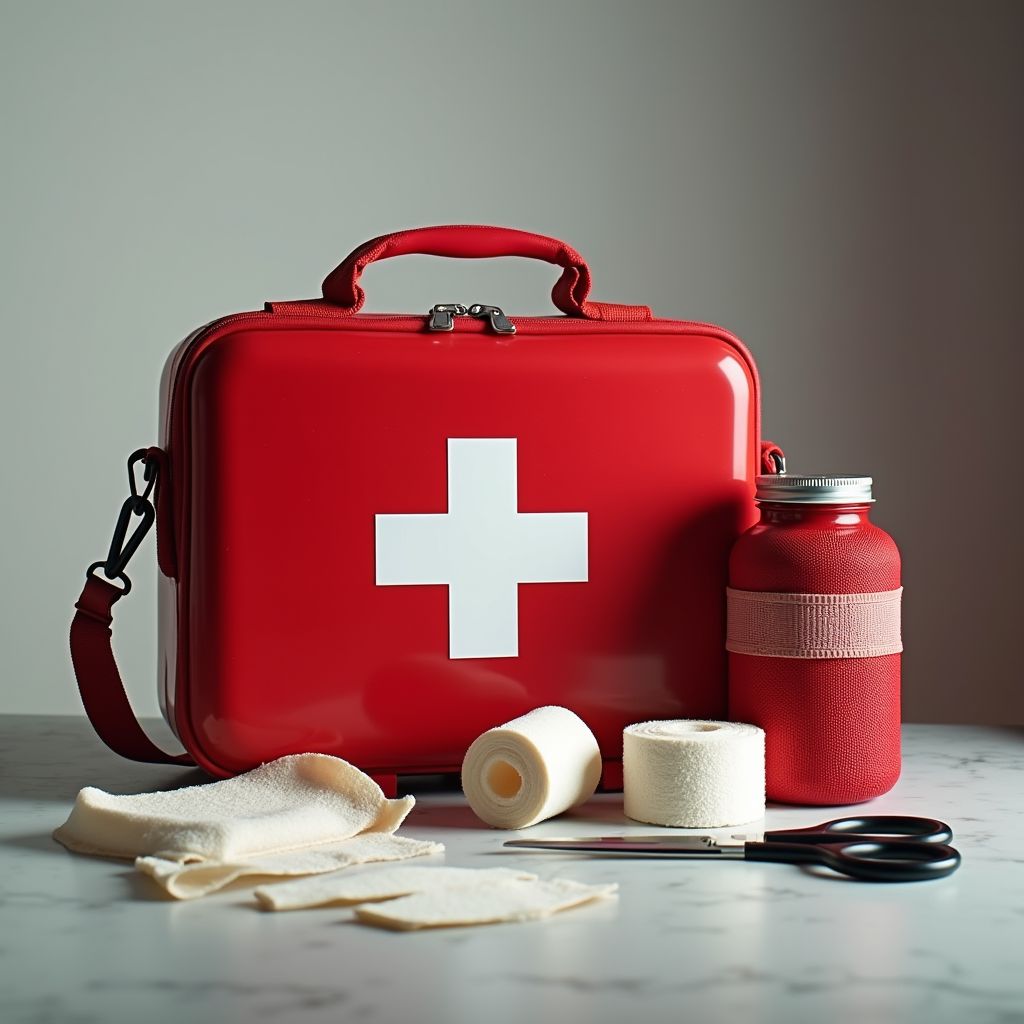
Many car owners have grown used to seeing the plastic or fabric case with a red cross in the cabin as just another formality for passing a roadside inspection. Reality proves otherwise: this is not merely an accessory for a future technical inspection, but a truly indispensable tool for saving a human life in the first critical minutes after a road accident.
A properly assembled set of rescue supplies helps buy time until medics arrive and stop dangerous bleeding. In this article we will look in detail at what should be in a driver’s first aid kit according to modern standards, what official requirements Ukrainian legislation sets out, and how to correctly use the contents of the kit during an emergency on the road.
Why do you need a car first aid kit?
Its main purpose is to promptly provide emergency medical assistance to victims until an ambulance crew arrives. Any road accident carries the risk of injury, where every second of delay may cost someone their health. That is why having a special kit in the cabin is a mandatory condition for the legal and safe operation of a vehicle.
It is important to understand the difference between a home medicine cabinet and a dedicated road kit. At home we are used to keeping headache tablets, nasal drops, or cough syrups. By contrast, a standard driver’s first aid kit contains no classic pharmaceutical preparations at all, since storage conditions in a car are often violated due to summer heat. Its main purpose is emergency tactical assistance in cases of physical injuries, burns, and open wounds.
What are the requirements for a driver’s first aid kit in Ukraine?
The entire regulatory framework governing the contents and quality of road medical kits in Ukraine is based on approved state standards. Every official kit on the market must comply with the current DSTU and undergo certification, with the marking applied to the packaging. The law divides road medical kits into two separate types according to their intended use and capacity.
The first type is known as the automotive medical kit AMA-1 and is intended for passenger cars, passenger vehicles with up to eight seats, and wheeled tractors.
The second type is coded AMA-2 and is mandatory for buses, trolleybuses, and any other large transport where the number of passenger seats exceeds eight. The main difference between them lies solely in the quantity of dressing materials, since a large bus requires a significantly greater volume of supplies to assist several victims at once.
Full contents of a car first aid kit
To close the safety question, every car owner should know the approved contents of a driver’s first aid kit and understand the role of each item. The state standard emphasises means of mechanically stopping blood loss and immobilising damaged parts of the body.
To make the information easier to take in, we have gathered the basic contents of a car first aid kit into a table showing the key items and their direct purpose.
| Item | Purpose | Quantity |
|---|---|---|
| Esmarch-type tourniquet or combat tourniquet | Reliable temporary control of massive arterial bleeding | 1 pc |
| Set of bandages of various sizes | Creating protective dressings on open wounds of the body | 5 pcs |
| Dressing pack | Rapid isolation of large damaged areas of skin | 1 pc |
| Antiseptic wipes | Initial cleaning of wound edges | 2 pcs |
| Medical scissors | Quick cutting of the victim’s clothing or seat belts | 1 pc |
Such a well-thought-out set of car first aid kit contents allows the driver to get their bearings quickly in an emergency and provide help even before medics arrive. Below we look at each important medical group in turn.
Means of stopping bleeding
The most dangerous consequence of a serious accident is massive blood loss, which must be dealt with immediately. For this, the kit includes a special haemostatic tourniquet capable of quickly cutting off blood flow when large vessels in the limbs are damaged. Alongside it, medical wipes and a sterile bandage are used, applied directly to the site of injury to form a tight dressing.
Means of dressing and immobilisation
A wide range of materials in various formats is used to isolate ordinary scratches and immobilise injured limbs. Medical roll and bactericidal adhesive plaster helps cover minor cuts and securely hold the edges of gauze dressings on the skin. The kit also includes a medical triangular bandage, which makes it easy to immobilise a passenger’s broken or dislocated arm, ensuring proper immobilisation of the body during transport.
Means of treating wounds
Initial hygiene of the injured area is the key to avoiding infectious complications later. Liquid or wipe-based antiseptic allows you to disinfect the skin around the injury painlessly, without causing additional chemical burns to the tissue. Remember that this list of medications in a car first aid kit is not intended to be poured directly into a deep open wound, but serves only for the safe treatment of its outer edges.
Auxiliary items in the kit
In addition to dressing materials, the kit includes important tools and personal protective equipment for the rescuer. Thick rubber gloves protect the driver from contact with the victim’s bodily fluids, which is the main safety rule. Strong blunt-tipped scissors make it possible to quickly cut through the fabric of winter clothing, while a thermal blanket protects against dangerous hypothermia or overheating while waiting for evacuation from the scene.
What can you add to the basic kit?
The state-approved list of supplies is a minimum, but experienced drivers advise adapting it to the individual needs of your family. You have every right to add medicines to the kit that you may need in everyday life during a long journey. For example:
- Your personal specific medications that family members take on a regular basis by prescription.
- Effective remedies for acute allergic reactions to insect bites or plant pollen in the forest.
- Eye drops for rinsing out accidental road dust or dirt.
- Additional sorbents to help with food poisoning.
Additional medications and ampoules are best placed in a separate compartment or in an extra bag inside the main organiser. This approach helps maintain order in a critical situation and keeps the main dressing materials clean and ready for use when first aid is needed.
How to store and maintain the kit?
Even the most expensive and professional kit will be completely useless if, at the crucial second, you cannot find it quickly in the cabin or its contents have deteriorated over time. There are simple rules of care:
- Never hide the first aid kit at the very bottom of the boot under a pile of heavy items or the spare wheel.
- Choose easily accessible places in the cabin — for instance, a special pocket under the driver’s seat or the space by the rear window.
- Secure the box firmly using Velcro straps.
- Protect the organiser from prolonged direct sunlight, which quickly breaks down the structure of rubber items and plastic.
A regular review of the kit’s contents should become a habit before the start of each new season. Pay particular attention to what should be in a car first aid kit: check the integrity of the packaging and make sure there is no moisture or dust.
Shelf life and renewal of supplies
Every item — from a simple plaster to a tourniquet — has a limited shelf life, after which using it becomes dangerous. Over time the adhesive base of plasters dries out, gauze bandages lose sterility due to microtears in the packaging, and the rubber of a tourniquet dries out and may snap under strong tension on a victim’s limb.
The standard service life of a factory car kit is usually three to five years. At the end of this period the driver is obliged to replace the whole set with a new one, or carry out an audit and buy replacements for individual items whose safe-use period has expired. Do not neglect this rule, since the success of emergency aid depends on the elasticity of a bandage or the strength of a tourniquet.
Liability for not having a first aid kit
Ukrainian law strictly requires every vehicle on the road to be equipped with serviceable and in-date first aid supplies. If, during a stop, a police officer discovers that this kit is missing or notices that its contents are expired, the driver faces an official fine under the current administrative code.
The amount of the financial penalty and the legal classification of the offence may vary depending on the type of vehicle. For ordinary private passenger cars, the absence of a kit is most often treated as a breach of operating rules, which entails a warning or a fine of 340 hryvnias. However, for drivers carrying out regular passenger transport on routes, liability is stricter, up to and including temporary withdrawal of the right to drive, since they bear direct responsibility for the lives of the people in the cabin. A report drawn up by the police will force you to pay up, so keeping your car in order always pays off.
Frequently asked questions
Can you use an ordinary home first aid kit instead of a car one?
No, such a substitution is categorically prohibited by state regulations. A household kit contains mainly therapeutic tablets and syrups that spoil quickly in a car due to temperature swings, and it has no means of stopping the massive bleeding that may be required during a road accident.
Where is the best place in the car to store the kit?
The ideal place is a special mount under the driver’s seat or inside the dashboard, if the dimensions allow. The main thing is to position the box so that it can be reached in seconds with one hand, without leaving your seat.
Do you need a separate first aid kit for a trip abroad?
Yes — if you are planning a trip in your own car, you need to study the medical standards of the destination countries in advance. For example, the European Union applies the strict international standard DIN 13164, which requires a somewhat different list of protective supplies and wipes in the cabin.
What should you do if supplies expire while on the road?
If you notice expired items during a journey, stop at the nearest pharmacy or petrol station. There you can always buy either a ready-made new car kit or individual fresh medical components to quickly refresh the old one.
How many first aid kits should a truck or minibus have?
The composition of the kit differs for different vehicle types: for lighter categories a basic set is enough, while extended kits are provided for buses and large-size transport. In this context it is important to understand what is included in a driver’s first aid kit, since its contents determine your readiness to provide first aid on the road.